Bradley Harris on Leadership Confidence and Taking Action
By The Leadership Match
Bradley Harris shares lessons on leadership confidence, turning strategy into action, asking for help, and communicating clearly under pressure.
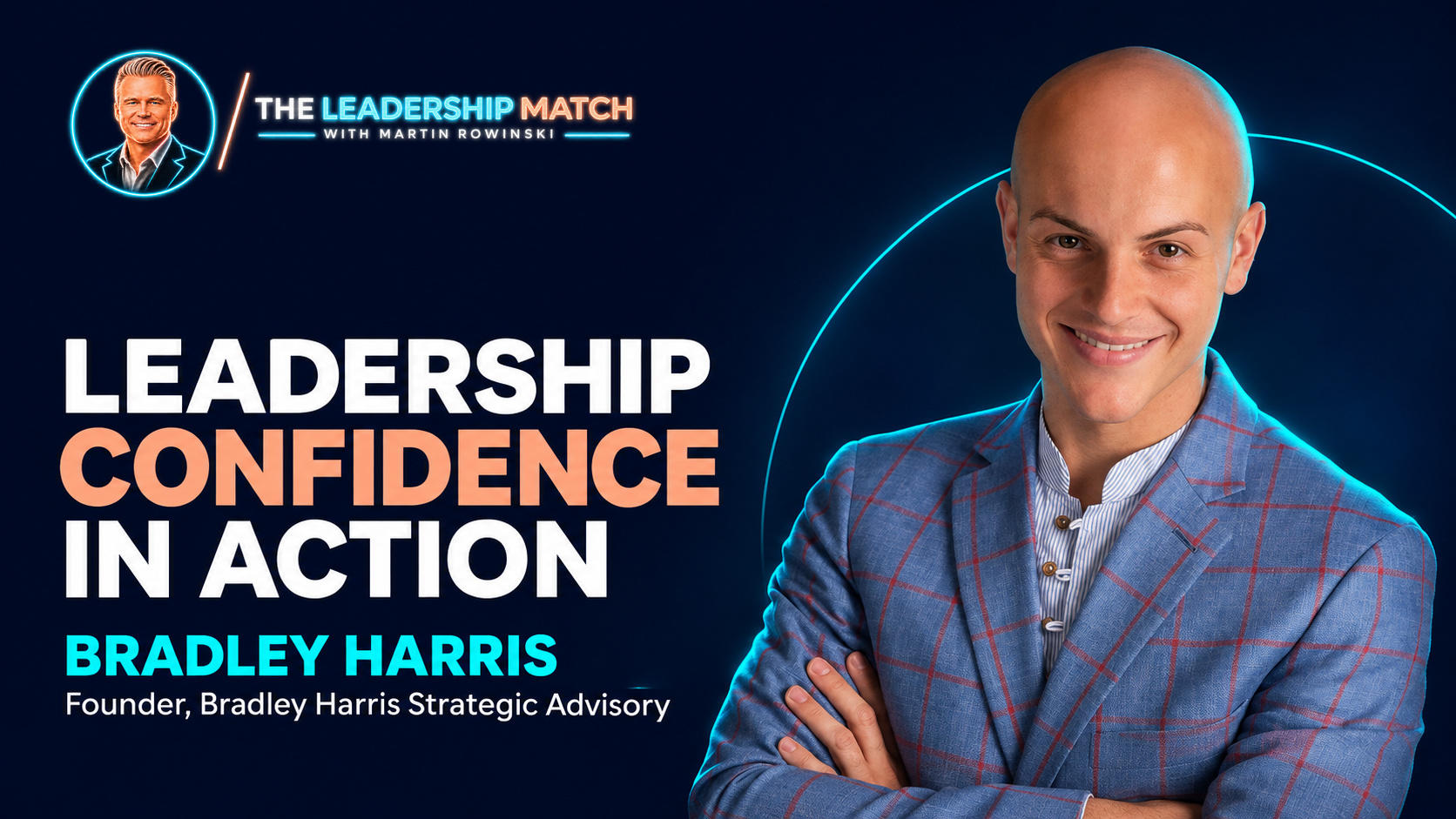
Bradley Harris on Leadership Confidence: Find Your Strengths and Put Them to Work Recognizing your strengths is a starting point. Bradley Harris explains why leadership also requires listening to others, turning plans into action, and asking for help when you are stuck. By Martin Rowinski When Bradley Harris was asked what legacy he wanted to leave as president of a foundation board, he did not propose another ambitious initiative. He pointed to a strategic plan the organization had already developed. It had taken time and money to produce. Now it was sitting on desks, gathering dust. His answer was straightforward: > "I'd like to just execute that plan. That's it." That moment captures something important about my conversation with Bradley on The Leadership Match. We discussed confidence, public image, and helping people recognize their strengths. But we also talked about what happens after the inspiring conversation ends. Who does the work? Which priorities matter? What do you do when you are uncertain, under pressure, or afraid to make the next decision? Bradley, founder of Bradley Harris Strategic Advisory, brings experience across government, economic development, and public affairs. His work includes positioning, messaging, and executive thought leadership. What made the conversation compelling was his willingness to discuss both the strengths he brings and the areas where he still needs support. Recognizing a Strength Does Not Always Mean Feeling Confident in It Bradley was drawn to leadership early. He participated in clubs, served as student body president, and became interested in how prominent leaders built their careers. At the University of Charleston, he studied public policy, with minors in leadership studies and communication. Today, part of his advisory work involves helping leaders become more confident in how they engage with the public and media. He described noticing qualities that people may not fully recognize in themselves. Someone may be respected for their judgment, communication, or ability to bring people together, yet struggle to acknowledge that contribution. Bradley asks whether they recognize what others see. Then he goes a step further: do they actually feel it? In his office, he keeps a reminder: > "Find the light in others and help them shine." It reflects how he wants to help others: identifying strengths they can use more deliberately. For leaders, that creates a useful opportunity. Encouragement becomes more meaningful when it is specific. Tell someone which contribution mattered. Explain what their judgment helped the team accomplish. Give them something concrete to understand and build upon. Confidence Develops Through Experience Bradley credited a university program advisor with pushing him beyond the classroom. His program required an internship. He recalled taking his résumé door to door at West Virginia's state capitol as a 19-year-old, introducing himself and explaining how he might contribute. That experience required him to do something different from studying leadership. He had to approach unfamiliar people, describe his abilities, and ask for an opportunity. It also gave him a chance to test whether work he imagined enjoying actually suited him. That distinction matters when we discuss leadership development. A person can understand an idea intellectually and still need experience applying it. A meeting, presentation, or unfamiliar assignment can reveal both capability and gaps. With feedback and practice, those experiences give someone a more grounded understanding of what they can do. Bradley's story also complicates the idea of the entirely self-made, naturally confident leader. He describes an early inclination to lead, but he also credits someone who challenged him to put that inclination into practice. Secure Leaders Make Room for Stronger Expertise Our conversation turned to leaders who surround themselves with people who agree with them. Bradley's preference was clear: > "I want them to be better than me." He was talking about putting capable subject matter experts in the roles where their knowledge could contribute. That is an important expression of leadership confidence. A leader can recognize personal strengths while welcoming people with deeper expertise, more energy, or better ideas in a particular area. The practical test comes when those people say something unexpected. Do you give them room to explain? Can their input change the plan? Are they being included early enough to identify problems before a decision becomes difficult to reverse? Bradley described the value of bringing a senior team or board into the conversation so they can identify angles the originator may have missed. For me, that connects confidence with the quality of the discussion a leader makes possible. Hiring expertise helps only when people have an opportunity to use it. A Strong Idea Still Needs Someone to Execute It Bradley's foundation-board story exposes a familiar problem: an organization can invest in strategy without establishing how it will become daily work. He was candid about his own contribution: > "I am the wow guy. I'm not necessarily the how guy, right?" He enjoys developing ideas. He also recognizes the need for people who can work through implementation. That self-awareness is useful. It allows a leader to ask what the work requires rather than assume enthusiasm will carry it forward. In Bradley's advisory relationships, he emphasized the importance of an internal person who can help keep execution moving. An outside advisor can contribute ideas and guidance, but the organization still needs ownership inside the business. The questions are practical: - Who is responsible for moving this forward? - What is the next step? - What input or support does that person need? - How will the organization know whether progress is being made? The neglected plan on the desk was already a source of direction. Bradley's proposed legacy was to use it. Too Many Priorities Can Make the Direction Hard to See Execution becomes more difficult when several initiatives compete for attention and each stakeholder is protecting something important. Bradley described bringing people back to the organization's core priority. Is the immediate emphasis affordability, innovation, efficiency, or something else? Those choices need discussion. Otherwise, people can work hard while applying different definitions of what matters most. Bradley prefers organizing around three main priorities or messages to keep attention focused. The value of that approach is focus: making choices clear enough that people can understand and act on them. A team needs more than a list of everything that matters. It needs enough direction to make decisions when those priorities compete. Calm Communication Requires Work Behind the Scenes When I asked what happens in his own head while helping others remain steady, Bradley compared himself to a duck. Above the water, it appears to glide. Underneath, it is paddling hard. The comparison fits his account of communications work under pressure. Appearing composed does not mean having no concerns. He described actively gathering information and consulting people with relevant expertise. His approach to an initial message centers on straightforward questions: - What is the situation? - What is known? - Who is affected, or what could the impact be? - When should people expect another update? In describing his own work, Bradley emphasized involving operational, financial, legal, and other subject matter experts as appropriate. He summed up that preference with a memorable phrase: > "Never stand in a glasshouse by yourself." The leadership lesson is about seeking informed input. When the stakes rise, a leader's confidence should leave room for people who understand parts of the situation more deeply. Bradley also acknowledged mistakes earlier in his career. His account presents steadiness as something practiced and improved through experience. When a Project Stalls, Examine What Is Holding You Back I asked Bradley what conversation a leader should have when an important project is stuck. He started with self-reflection. Is there a decision being avoided? Is fear involved? If so, what is the fear? He discussed fear of failure and concern about how others will perceive the work. Given his background in public relations, he is accustomed to considering the external response. He also recognizes that those considerations can become personal obstacles. Not every stalled project is caused by fear. Resources, dependencies, unclear priorities, and other constraints can matter. But his question gives leaders a way to examine their own role in the delay. He encouraged reaching out to a mentor, business partner, or trusted colleague, even if the immediate need is simply to think through the problem together. That is a modest, useful next step. You do not always need someone to take over. You may need another person to ask the question you have not considered. Give Yourself Enough Distance to See the Problem I shared a practice that has helped me. When I am struggling with an idea or project, I write it out and put it aside. Later, often the next day, I read it as if someone else had left it on my desk. Then I ask how I would help that person. I still know it is my work. But the exercise helps me examine it from another perspective and decide whose input might be useful. That is a reflection practice for situations where there is time to step back, rather than a reason to delay an urgent decision. Paired with Bradley's suggestion to ask for help, it creates a practical sequence: clarify what is troubling you, then bring the right person into the conversation. Experience Does Not Eliminate Being a Beginner One of Bradley's most revealing answers came when I asked what he was still a beginner at. > "I'm still a beginner at being a business owner." He described the transition from corporate resources to responsibility for revenue, expenses, insurance, and the other demands of running his own practice. He also talked about rebranding after realizing his first version did not represent the business the way he wanted. That admission adds depth to the earlier discussion about helping others feel confident. Bradley can bring experience to a client's challenge while still learning how to manage parts of his own business. Both can be true. His outlook remained optimistic: > "It is far, far more exciting than it is scary to me." The excitement did not erase the uncertainty. It helped explain why he was willing to continue working through it. For leaders, that is a useful reminder that competence is specific. Experience in one area does not make every new responsibility familiar. Recognizing that can help you seek support sooner. Put Confidence to Work in One Conversation The phrase about helping others find their light is a good starting point for Bradley's approach. The rest of the conversation shows what gives it substance. Notice a strength. Give someone an opportunity to use it. Invite expertise. Assign ownership. Ask for help. Learn from what happens. For your next team conversation, choose a project that needs attention and ask: What is the next decision, who can help us make it, and who will own the next step? If you are the person holding it up, examine why. If someone else has the expertise to move it forward, give them room to contribute. Bradley's foundation-board answer stays with me because it is so direct. There was already a plan. The next contribution did not require another impressive idea. It required someone to help the organization act. --- Watch or listen: My full conversation with Bradley Harris on The Leadership Match with Martin Rowinski. For more information on Bradley Harris and his strategic advisory practice, visit https://www.bradleyharris.com/. Join the conversation: What is one conversation you have been putting off that could help move something important forward? Frequently Asked Questions Who is Bradley Harris? Bradley Harris is the founder of Bradley Harris Strategic Advisory. His experience spans government, economic development, and public affairs, and his work includes positioning, messaging, and executive thought leadership. How does Bradley Harris approach leadership confidence? Bradley describes helping people recognize strengths that others already see in them. His conversation also emphasizes practical experience, listening to expertise, and asking for support when needed. What can leaders do when a strategic plan is not being implemented? Bradley emphasizes identifying internal ownership and working through realistic steps. His foundation-board example illustrates the value of executing an existing plan before creating another initiative. Does asking for help weaken a leader's authority? Bradley views asking for help as a way to build strength and character. Bringing in a mentor, colleague, or subject matter expert can help a leader examine a problem and identify a more informed next step. Can an experienced leader still feel like a beginner? Yes. Bradley describes being experienced in advisory and communications work while still learning business ownership. A new responsibility can require unfamiliar skills even when someone has substantial experience elsewhere.
All articles