Executive Branding Beyond the Title | Martin Rowinski
By The Leadership Match
Martin Rowinski shares how to build an executive brand rooted in trust, values, and action, with five practical steps to clarify your leadership value.
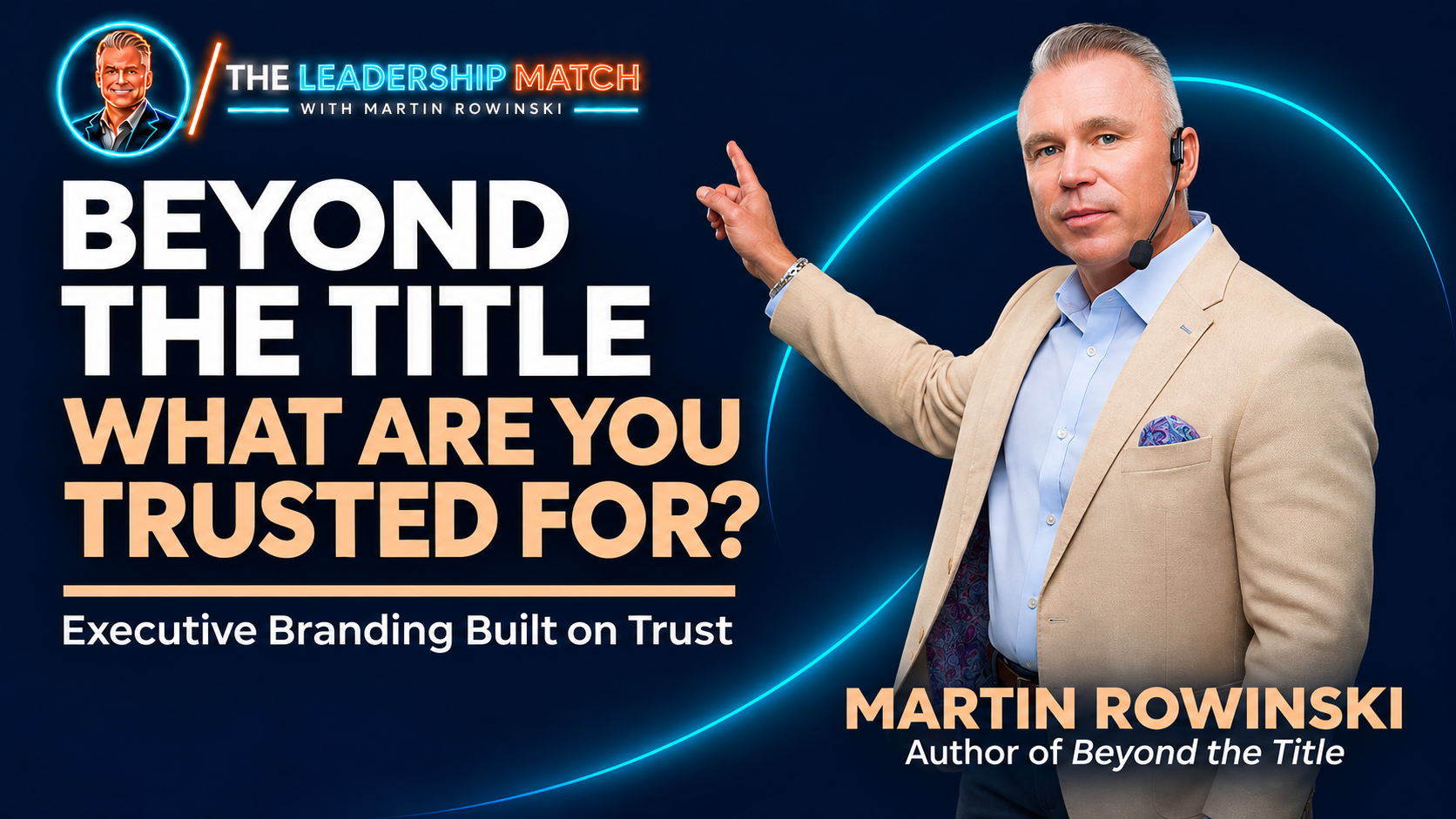
Executive Branding Beyond the Title: What Are You Trusted For? By Martin Rowinski | The Leadership Match If your title disappeared tomorrow, what would people still trust you for? Take away the company name, the position on your business card, and the credentials in your biography. What remains? Would people trust your judgment in a difficult moment? Your ability to develop others? Your willingness to tell the truth when it is uncomfortable? Your capacity to turn a complicated problem into a clear next step? That question sits at the heart of executive branding. It is also the question behind my book, Beyond the Title, and the solo episode of The Leadership Match that inspired this article. A title tells people where you sit in an organization. Your leadership brand helps them understand the value you bring—and what they can expect when they work with you. “A title tells people what position you hold. Your brand tells people what you stand for.” For executives, founders, board members, and emerging leaders, that distinction matters. Roles change. Companies change. The reputation you build through your decisions and relationships can carry across those transitions. The work begins with becoming clear about who you are beyond the position. What Is Executive Branding? Executive branding is the intentional process of building and managing your reputation, presence, and influence as a leader. It connects your expertise and experience with the people who can benefit from them. It also requires consistency between what you communicate publicly and what others experience privately. A useful executive brand answers five questions: - Who are you? - What do you stand for? - What perspective do you bring? - Who do you help? - What can people count on when they work with you? Your LinkedIn profile, biography, articles, and speaking appearances help communicate those answers. Your actions give them credibility. Someone may discover you through a thoughtful article. Their trust develops further when they see you follow through, listen carefully, share credit, and make decisions that reflect the values you describe. Executive branding gives that pattern a clear expression. Why Your Leadership Brand Must Extend Beyond Your Current Role I have met leaders with remarkable accomplishments: founders who built businesses, executives who navigated crises, board members who helped organizations change direction, and athletes who translated lessons from sports into entrepreneurship. I have also learned that an impressive title does not always indicate an impressive leader. Some of the strongest leaders I have encountered were quiet, grounded, and clear about their purpose. They listened. They treated people with respect. Their reputation reflected years of consistent behavior. Their authority extended beyond a job description. That is important because a role gives you a particular context in which to contribute. It does not fully explain your capabilities or your character. A chief operating officer may be especially valuable because they bring clarity to complex organizations. A founder may have a gift for developing leaders. A board member may be trusted for asking difficult questions without damaging relationships. Those capabilities remain relevant when the title changes. If your professional introduction stops at your position, people must work out the rest for themselves. A clear leadership brand helps them understand where your experience can make a difference. Your Story Explains the Values Behind Your Leadership My own leadership story began long before a company, a boardroom, a book, or a podcast. I came to the United States as a child from Communist Poland with my mother. It was just the two of us. I watched courage and sacrifice up close. I learned that opportunity should never be taken for granted. You work for it, respect it, and use it to create opportunities for others. Those experiences shaped the way I think about leadership before I had a title to attach to it. Every leader has experiences that help explain their decisions. A demanding first job may have shaped your work ethic. A mentor may have shown you how to recognize potential in others. A difficult business decision may have clarified which values you are willing to protect. The purpose of sharing those experiences is to make your leadership understandable. A list of accomplishments tells people what happened. A well-chosen story helps them understand what you learned and how that learning influences your work today. Share with purpose You do not need to disclose every private detail to communicate authentically. Choose stories that illuminate something useful: - A decision that clarified your priorities. - A mistake that changed your approach. - A person who challenged your assumptions. - A moment when a stated value required a difficult action. - An experience that explains who you want to help. The story should lead somewhere. Give people a lesson they can apply, a question worth considering, or a clearer understanding of the contribution you make. Define Your Unique Value Beyond Your Credentials A strong executive brand makes your value easier to recognize. In Beyond the Title, I discuss the importance of a unique value proposition: the combination of strengths, values, experiences, and lessons that enables you to solve meaningful problems. For a leader, that goes deeper than a polished tagline. Some leaders build teams that perform well through change. Others connect technology decisions to business priorities. Some bring calm to a crisis, improve financial discipline, or help a board examine an issue from a perspective it has overlooked. The goal is to identify the contribution people repeatedly trust you to make. Ask yourself: Which problems do people bring to me? Look for patterns in requests for advice, introductions, judgment, or support. Where have I made a meaningful difference? Identify the decisions and actions behind the outcome, including the contributions of others. Which experiences shape my perspective? Your background may help you recognize something that another leader would miss. Who benefits most from that combination? Be specific enough that the right people can recognize themselves. For example, “experienced executive with a proven track record” gives a reader little to work with. “I help growing companies build leadership teams and decision-making practices that can support their next stage” describes a problem, an audience, and a contribution. That clarity can support conversations about executive roles, board service, partnerships, and speaking opportunities. It does not guarantee an opportunity, but it helps people understand why a conversation with you may be relevant. Build Your Executive Brand on Clarity, Relatability, and Consistency In the episode, I identified three qualities that strengthen an executive brand: “Clarity, relatability, consistency.” Together, they connect what you stand for with how people experience you. Clarity: Make your contribution understandable People should be able to explain your value without reciting your résumé. That requires choosing what matters most. If your biography attempts to communicate every capability and achievement, your central contribution can disappear. Start with the problems you help solve and the perspective you bring. Use relevant experience as evidence. Relatability: Let people see the person behind the position Leaders become more understandable when they share how they learned, adapted, and made difficult choices. Relatability does not require turning every professional interaction into a personal story. It means allowing enough of your experience to show that others can connect your advice to a real journey. A lesson earned through a mistake can be more useful than a flawless account of success. Consistency: Align your words with your behavior Consistency is where a leadership brand earns credibility. If you emphasize integrity, people should see it in how you handle commitments. If you emphasize relationships, they should experience care and attention in your communication. If you emphasize growth, they should see you learning as well as teaching. Your message can evolve as your experience grows. The underlying standard is that your public presence and everyday behavior should support the same understanding of who you are. Relationships Make Your Leadership More Useful A leadership brand develops through relationships as well as communication. Trusted peers can challenge assumptions. Advisors can help you see a risk earlier. Mentors can offer perspective during a transition. People you mentor can deepen your understanding of what another generation of leaders needs. As I said in the episode: “Networking is building meaningful relationships before you need them.” That requires showing interest when there is no immediate transaction to complete. Make a relevant introduction. Follow up on something important to the other person. Share an experience that could help them avoid a mistake. Ask a thoughtful question and listen to the answer. I also believe leaders should participate in mentorship from both sides. Be a mentor and help someone else rise. Be a mentee and remain open to learning. That combination demonstrates generosity and humility. It also keeps your leadership connected to experiences beyond your own. Five Actions to Strengthen Your Executive Brand This Week Executive branding becomes useful when reflection leads to action. These five steps come directly from the work I outlined in the solo episode. 1. Write an introduction without your title Remove “CEO,” “founder,” “president,” or your current role from the opening sentence. Begin with: “I help…” Then explain the people you serve, the problem you address, and the contribution you make. For example: “I help companies build stronger leadership teams, stronger boards, and better decision-making around values, vision, and mission.” Use language you would actually say in a conversation. If the introduction sounds impressive but leaves someone unsure what you do, simplify it. Your title can follow. Let your value lead. 2. Choose three core values and show the evidence Write down three values that genuinely guide your leadership. Then identify one specific example for each: - When did that value influence a decision? - What trade-off did it require? - Who experienced the effect? - What did you do that someone else could observe? “Integrity” becomes meaningful when you can explain how you handled a commitment under pressure. “Empathy” becomes visible when it influences how you listen and respond. “Growth” becomes credible when you invest time in learning and developing others. A value needs a connection to behavior. 3. Ask three people how they experience your leadership Reach out to people who know your work from different perspectives. A colleague, a team member, and a trusted external partner may each see something different. Ask: - What do you believe I am known for? - What do you trust me to do well? - Where could I communicate my value more clearly? Look for patterns rather than selecting only the comments you like. You may discover a strength you have overlooked. You may also find a gap between what you intend to communicate and what people experience. That information gives you a more honest foundation for your brand. 4. Turn one leadership lesson into useful content Choose one experience from your life or career. Use a simple structure: Tell the story. Explain the situation and the decision or challenge. Name the lesson. Describe what changed in your understanding. Offer an action. Give the reader or listener something practical to try. This can become a LinkedIn post, an article, a short video, or a podcast episode. The purpose is to make experience useful to someone else. You do not need to comment on every topic or present yourself as an expert in everything. Start where you have something meaningful to contribute. 5. Audit your public presence Review the places people encounter you before speaking with you: - Your LinkedIn headline and About section. - Your professional biography. - Your website. - Your articles and podcast appearances. - Your photographs and speaker materials. Ask whether they communicate a consistent picture of your expertise, values, and direction. A profile may accurately describe a previous role while doing little to explain the work you want to contribute now. An impressive biography may omit the specific problems you help solve. Update those gaps with clear language and relevant evidence. Your public presence should help people understand who you are today and where your contribution fits. Build Trust Before You Need the Next Opportunity One mistake I see leaders make is waiting until they want something before becoming intentional about their executive brand. They begin when they want a board seat, a larger role, investors, or media attention. But a credible reputation develops through repeated experiences. A new biography can communicate your value more clearly; it cannot substitute for a history of following through. Start while you are doing the work. Document what you learn. Give others credit. Maintain relationships. Share a useful perspective. Make sure your values are visible in decisions that matter. “Your title may introduce you, but your values define you.” That is the foundation of going beyond the title. What Will People Still Trust You For? The question I opened with is worth returning to: If your title disappeared tomorrow, what would people still trust you for? Your answer should point to more than a position you have held. It should describe the judgment, character, expertise, and contribution people have experienced. That is the work of executive branding: becoming clear about your value, communicating it honestly, and reinforcing it through action. Write your titleless introduction. Ask someone you trust how they experience your leadership. Choose one action that brings your reputation closer to the leader you intend to be. The brand becomes stronger as the evidence grows. Watch or listen to my solo episode, “Beyond the Title: What Are You Trusted For?” on The Leadership Match, and explore these ideas further in my book, Beyond the Title.
All articles