Feeling Behind in Life? Success Has No Age Deadline
By The Leadership Match
Feeling behind in life? Martin Rowinski explores career comparison, outdated timelines, and practical steps toward success on your own terms.
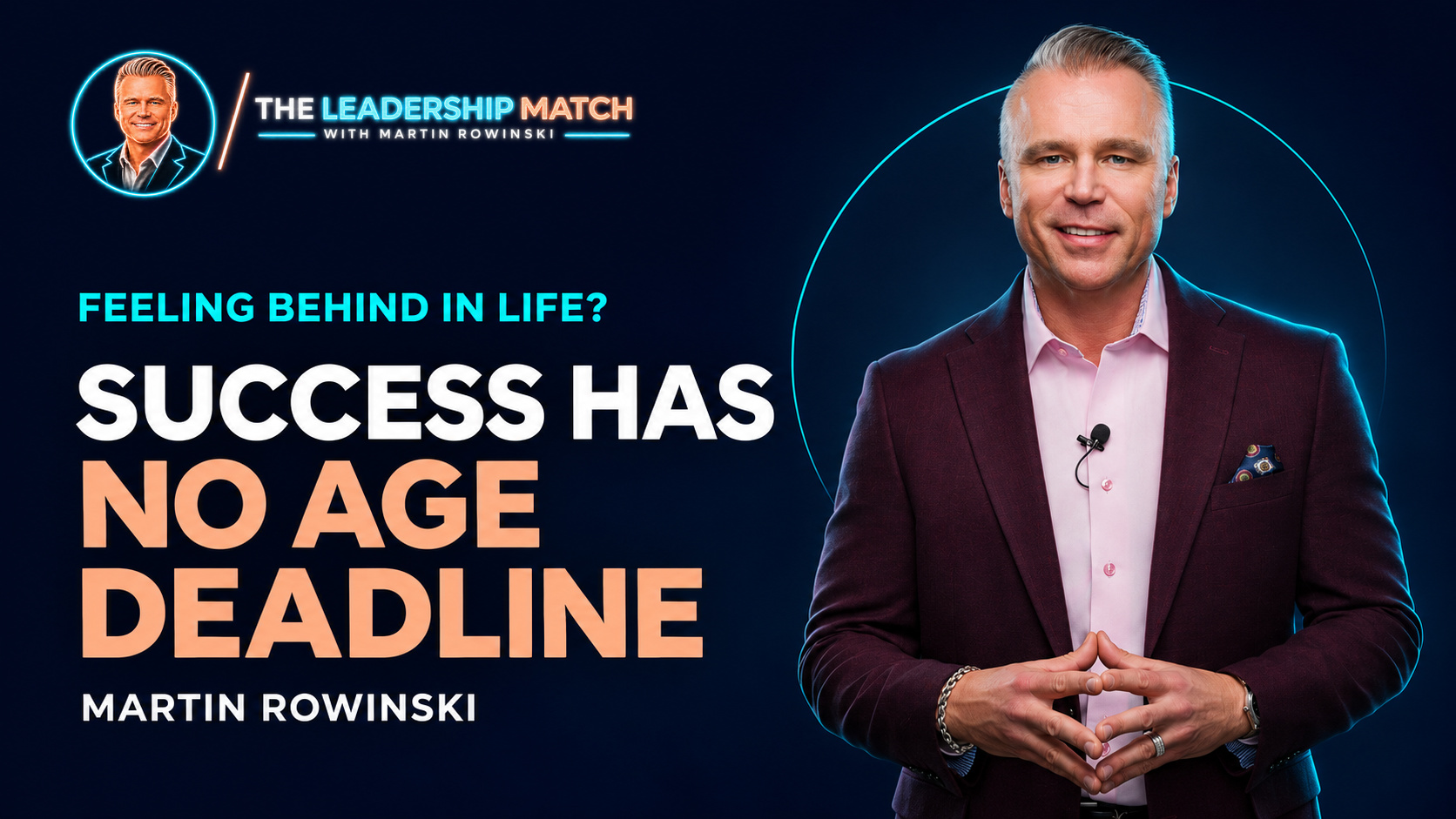
I Thought I’d Be Further Ahead by Now: Why Success Has No Age Deadline An old timeline can turn years of effort into a feeling of falling short. Before you decide you are behind, examine the destination, the deadline, and what you can responsibly do next. By Martin Rowinski The thought can arrive on an ordinary Tuesday. A promotion appears in your feed. A former colleague announces the sale of a business. Someone younger becomes a CEO. You were reasonably satisfied with your morning until another person’s milestone changed how you felt about your own. I should be further ahead by now. By 30, you expected your career to be settled. By 40, you imagined a certain title, income, or business of your own. By 50, you thought there would be more freedom and less financial pressure. Instead, there are unfinished goals, responsibilities you did not anticipate, and decisions you are still trying to make. In this solo episode of The Leadership Match, I examine the timeline behind that feeling. Where did it come from? Do you still want the life it describes? And what happens when an ambition becomes a judgment about your worth? Success has no universal age deadline. Your circumstances still matter. So do your choices and your willingness to act. But before you decide you have fallen behind, it is worth checking whether you are measuring yourself against a future you would still choose. The Timeline Was a Prediction, Not a Promise “By now” carries more judgment than it first appears to. By now, I should be making more money. By now, I should be running the company. By now, I should have something of my own. The phrase takes a goal, attaches an age to it, and gradually turns it into a promise you believe you broke. Consider when you made that promise. What did you know about the career ahead of you? About relationships, family responsibilities, caregiving, or setbacks? Did you understand what the work would demand or how your priorities might change? As I say in the episode: “You are making a prediction about a life you hadn't lived yet.” A goal can help you focus and make decisions. But a prediction made with limited information deserves to be revisited as you learn more. That does not mean every missed goal should be explained away. Sometimes you need to acknowledge a poor decision, inconsistent effort, or an approach that did not work. Those are things you can examine and change. “I have not reached this goal” identifies a situation. “I am a failure because I have not reached it” turns that situation into an identity. The second conclusion makes it harder to recognize your options. Comparison Runs on Missing Information A few minutes on your phone can change the standard you use to evaluate years of work. You see a promotion, a business milestone, or a vacation someone else seems to have time for. Your circumstances remain the same, but suddenly they feel inadequate. The information behind that comparison is incomplete. You see the title without seeing the responsibilities attached to it. You see the announcement without seeing the years of uncertainty, the support, or the tradeoffs that made it possible. Another person’s success can be entirely real and still be insufficient evidence to conclude anything about yours. You can admire what someone has accomplished. You can learn from it. You can celebrate it without using it to diminish your own effort. The more useful question is whether you want the life behind the achievement. Would you want their schedule? Their obligations? The decisions they have to carry home? The things they gave up to make room for what you can see? Those questions help turn comparison into something more specific: information about what you actually value. Do You Want the Title, or What It Represents? Sometimes the goal we describe is standing in for a deeper need. A title represents respect. A certain income represents security. A larger business represents proof that we are capable. That distinction matters because achieving the visible milestone does not guarantee the underlying need will be met. If you want more time with your family, a role that claims every evening may move you further from the life you want. If you want greater ownership over your work, another promotion may not resolve your frustration. And if an achievement is supposed to make you feel good enough, ask what happened the last time you reached a milestone. Did you allow yourself to recognize it, or did you immediately move the finish line? Before pursuing a goal more aggressively, get clear about what you expect it to change. What would your days look like? What would you gain? What would you need to give up? A goal that made sense ten years ago may no longer fit your responsibilities or values. Updating it can be a thoughtful response to what you now understand. Your Own Timeline Still Requires Accountability There is a version of “everyone has their own timeline” that becomes permission to postpone everything. That is not what I mean. If something matters to you, it deserves action. Sometimes the difficult conversation has been avoided. Sometimes a decision has been delayed. Sometimes planning has become a comfortable substitute for trying. You can acknowledge those patterns without attacking yourself. Ask: What did I try this month? What did I learn? What will I change? These questions give you something concrete to evaluate. At the same time, more effort is not always the answer. You can fill your calendar with work while leaving the most important problem untouched. You can keep solving everything yourself when progress requires delegation, advice, or a new skill. Before adding more hours, identify the result you want and what appears to be preventing it. Do you need greater consistency? Better feedback? A different approach? Experience you have not yet developed? “You can give yourself room to grow and still expect yourself to take action.” That balance matters. Compassion helps you assess your circumstances honestly. Accountability helps you do something with that assessment. What Lost Time Leaves Behind Sometimes the hardest part of feeling behind is the belief that you have already lost too much time. Years in a job that did not lead where you hoped. A business that failed. A period spent caring for someone else. Staying somewhere because leaving felt frightening. I do not believe you have to pretend every setback was necessary or that every difficult experience happened for a reason. Some decisions have consequences you wish you could undo. Some opportunities do pass. Acknowledging that is more honest than forcing a positive explanation onto everything. But there is another question worth asking: What can I carry forward? Perhaps you understand people more clearly. Perhaps you recognize problems earlier. Perhaps you know which environments bring out your best work and which ones gradually wear you down. You may ask better questions before making a commitment. You may understand the cost of ignoring your instincts or failing to seek advice. A new role or industry will still require learning. But changing direction does not erase your experience with responsibility, uncertainty, relationships, and consequences. Take an honest inventory. Recognize what you bring while remaining open about what you still need to develop. Your Next Step Must Fit Your Actual Life Success having no age deadline does not mean everyone has the same options. People may depend on your income. You may have limited room for financial risk. Your responsibilities may be different from those you had when you first imagined changing careers or starting a business. Those considerations belong in the decision. If you cannot leave your job tomorrow, you may still be able to speak with potential customers, test an idea, or identify the resources a business would require. If you want to move into a different field, you can investigate the experience needed and begin closing the gap. A smaller step can produce information that helps you make a larger decision. The question I return to in the episode is: “What can I responsibly do now?” It respects your obligations while keeping the conversation open. “I’m too old” can end an idea before you have examined it. Naming the actual constraint gives you something more useful to work with. Feeling Behind Can Make You Rush the Wrong Decision When you believe you are late, speed becomes tempting. A title looks attractive before you understand the job. A business opportunity feels urgent before you have examined the commitment. Warning signs become easier to dismiss because you want proof that you are finally moving forward. As I put it in the episode: “When you feel late, speed can become more attractive than good judgment.” For leaders, that pressure can affect decisions involving employees, partners, and families as well as their own careers. Before committing, ask yourself: Would I still want this if nobody else knew about it? Would it appeal to me if I were not comparing myself with someone else? Does it support the life I want, or mainly make me look successful? An opportunity can be worthwhile and still be wrong for you. Giving yourself space to evaluate it helps you distinguish genuine interest from the pressure to catch up. A Practical Reset When You Feel Behind in Life You do not need to solve your entire future today. Start by making the expectation specific enough to examine. 1. Write down your “by now” sentence Finish this thought: By this age, I should have... Name the actual goal. A vague feeling of inadequacy is difficult to address. A specific expectation can be questioned, revised, or acted upon. 2. Examine where it came from Was it something you chose? An expectation from your family? A standard in your industry? A timeline borrowed from someone you admired? Ask what you knew when you set it and whether you would choose the same deadline today. 3. Decide whether you still want the outcome Explain why it matters now. Look beyond the title or number. Consider what achieving it would change in your daily life and what it would require from you. If the goal still fits, pursue it deliberately. If it no longer fits, identify what does. 4. Inventory your resources and gaps Write down the skills, relationships, experience, and resources available to you. Then identify what is missing. Avoid inflating your readiness or dismissing your strengths. The purpose is to understand your starting point well enough to choose a useful next step. 5. Commit to one action in the next 30 days Make it specific. Have the conversation. Send the proposal. Ask for feedback. Test the idea. Make the decision you have been postponing. Choose something you can complete and learn from. 6. Review more than the final outcome Did you follow through? What information did you gain? Are you better prepared? What should change next? A larger result may take longer than you want. You can still evaluate whether your actions are helping. “You may not control exactly when a larger goal happens, but you can take responsibility for the next step.” Choose a Definition of Progress You Can Live With Career milestones and financial goals matter. They are part of how many of us build security, opportunity, and independence. They are not the only evidence of a meaningful life. Your relationships matter. Your health matters. So do the commitments you keep and the way you behave when circumstances become difficult. If your definition of success includes only a title or number, it can overlook things you have worked hard to build. It can also encourage decisions that damage other parts of your life. Ask yourself: What would make the next year meaningful to me? The answer may include a promotion, a business launch, or a career change. It may also include becoming a more present parent, a more thoughtful leader, or someone who follows through consistently. Be specific about what matters. Then consider whether your calendar and decisions reflect it. Your Old Deadline Does Not Have to Decide What Comes Next “I should be further ahead” keeps your attention on the gap between what you expected and what happened. A different question helps you work from where you are: Given where I am today, what do I want to do next? You can answer that question without denying disappointment or lowering every ambition. You can recognize a mistake, accept a responsibility, and still identify something worth pursuing. You can also stop treating another person’s milestone as a deadline for your own life. Time matters. That is why the next decision deserves your attention more than another round of judgment about the last decade. As I say at the end of the episode: “Don't let the time you thought it would take get in the way of what you can still accomplish.” Write down the expectation you have been carrying. Decide whether it still belongs to you. Then choose one action that moves you toward the life you want now. Watch or listen to the full episode: I Thought I’d Be Further Ahead by Now | Success Has No Age Deadline on The Leadership Match with Martin Rowinski. Join the conversation: What did you think you would have achieved by now, and do you still want it for the same reasons? Frequently Asked Questions Why do I feel behind in life? Feeling behind can come from comparing your circumstances with other people’s visible achievements or with expectations you set years ago. Identify the specific goal and deadline behind the feeling, then examine whether they still reflect what matters to you. Does success have an age deadline? There is no universal age by which everyone must achieve the same milestones. Specific opportunities can have time limits, and your responsibilities affect your options. But missing a personal deadline does not determine your worth or everything you can accomplish next. How can I stop comparing my career to others? Ask what you actually want from the achievement you admire. Consider the responsibilities and tradeoffs behind it, then turn that insight into a goal based on your own priorities. Measure your actions and learning against that goal. How do I stay ambitious without being too hard on myself? Set clear goals and review specific actions rather than judging your identity. Ask what you tried, what you learned, and what you will change. Recognize real constraints while taking responsibility for the next step available to you.
All articles