How to Reset After a Setback: A Leadership Skill
By The Leadership Match
Martin Rowinski explains how leaders can reset after setbacks, take responsibility, learn from disappointment, and approach the next opportunity with clarity.
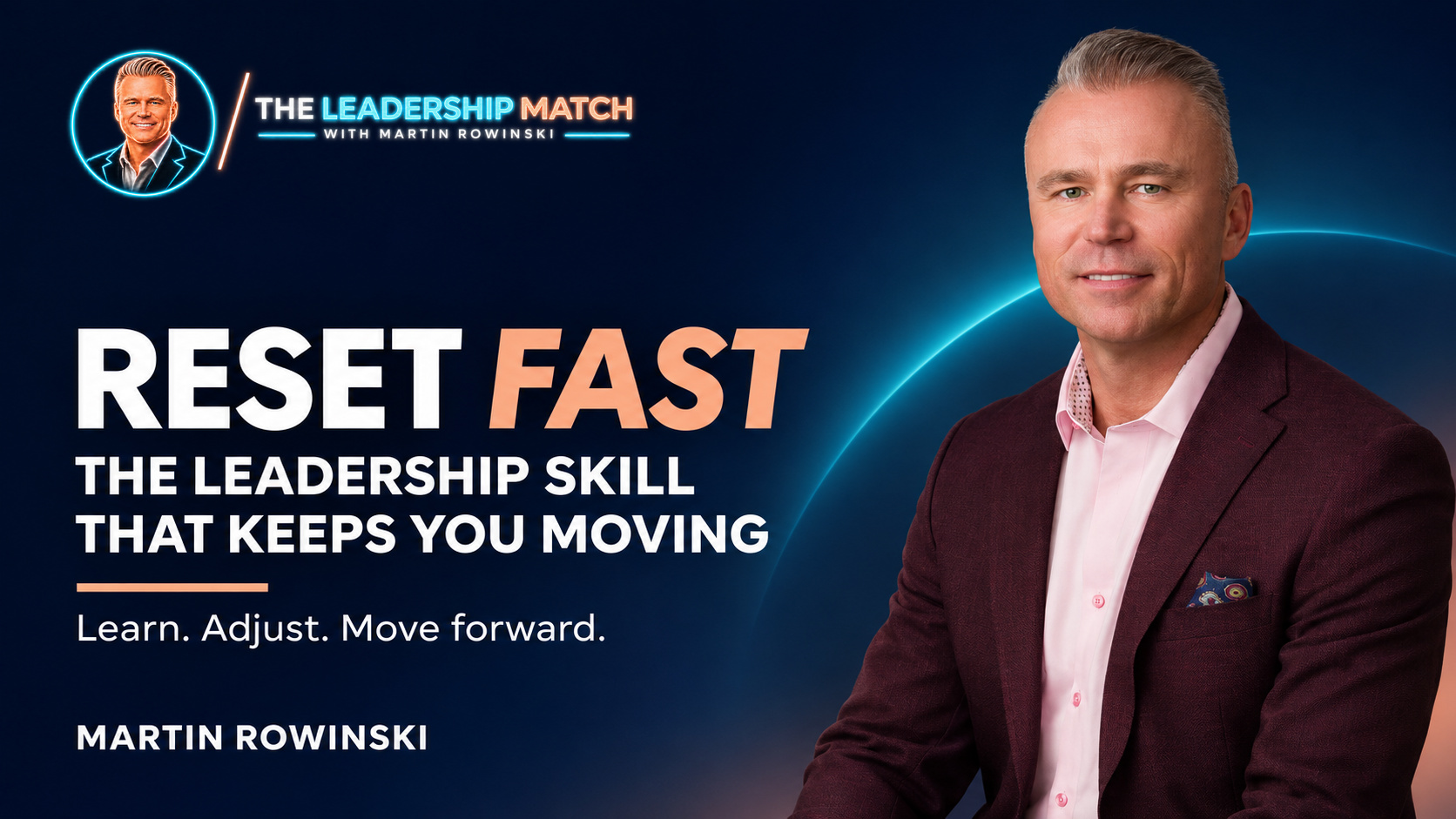
Reset Fast: The Leadership Skill That Keeps You Moving By Martin Rowinski A difficult meeting ends, but your frustration follows you into the next one. A deal falls apart, and you approach the next prospect expecting another rejection. You miss an opportunity, then hesitate when another appears. The original setback may be over. Its influence on your decisions can continue. I have been talking about attitude, consistency, and the importance of not giving up. In this solo episode of The Leadership Match, I focused on a skill that connects all three: the ability to reset. “Develop the ability to reset fast.” For a leader, resetting means acknowledging what happened, taking responsibility where appropriate, and bringing your attention back to what the next situation requires. You may still feel disappointed. You can also begin making a more useful decision. Why I Believe Attitude Is a Skill Some people seem to recover from frustration more easily than others. They experience a disappointment, regain their focus, and continue. It is tempting to assume that this ability is simply part of their personality. My view is that we can work on it. “Attitude is a skill.” We develop leadership capabilities through practice. We improve how we communicate, prepare, listen, and make decisions. Our response to everyday setbacks deserves the same attention. You cannot control every missed opportunity or another person’s decision. You can practice how you respond, including when you pause, what questions you ask, and how you prepare for the next conversation. That practice matters because leadership rarely gives us a perfect sequence of events. A challenging morning can be followed by an important afternoon. A disappointing result can arrive just before someone needs our judgment. The next situation deserves our attention on its own terms. The Golf Lesson: Leave the Last Hole Behind Golf makes this lesson easy to recognize. You hit a ball into the water. You three-putt. You finish a hole frustrated with yourself. I have been there. Then you arrive at the next tee. The previous score is already recorded, but you are still replaying the mistake. You might rush your setup. You might try an unnecessarily aggressive shot to make up for what happened. You might stop paying attention to the conditions in front of you. The frustration is now influencing a separate decision. As I said in the episode: “The skill is learning to reset before the next shot.” You can learn from the bad hole. Perhaps you chose the wrong club or rushed your putt. Take that information with you. Then assess the shot you actually have. The same applies to soccer. If you remain focused on a missed opportunity, you may fail to get back into position for the next one. Preparation includes becoming available for what happens next. What Carrying a Setback Looks Like in Business In business, the effects can be less visible than a rushed golf swing. A leader who feels embarrassed by a failed presentation may become defensive when a colleague asks a reasonable question. A founder disappointed by a lost deal may discount the next proposal before understanding the buyer’s needs. An executive who was passed over for an opportunity may begin describing their experience with less confidence. In each case, the previous outcome starts shaping a new situation. A useful question is: Am I responding to what is happening now, or to what happened earlier? That question creates room to reconsider your approach. Your next client is a different person. Your next meeting has a different purpose. Your next decision may require a different response. You still need to learn from experience. You also need to notice when frustration is distorting how you interpret the present. Resetting Does Not Require Ignoring Disappointment This was an important distinction in the episode: “Resetting fast does not mean you do not feel it. It means you do not let it own you.” You can be frustrated and still choose to listen carefully. You can be disappointed and still prepare thoroughly. You can regret a decision and still take responsibility for correcting it. A reset starts with an honest acknowledgment of your reaction. Pretending that nothing happened can leave the underlying issue unresolved. For everyday leadership setbacks, the aim is to regain enough perspective to choose your next action thoughtfully. That does not require having every feeling settled first. It also does not mean rushing other people through their disappointment. A team may need an explanation, a discussion, or a change in direction before it can move forward effectively. How to Reset After a Setback The message in the short was simple: “You take the lesson. You take the responsibility. And you take the next step.” Here is a practical way to apply it. 1. Pause Before You React Give yourself a moment before sending the defensive email, making the rushed promise, or deciding that an entire strategy has failed. Ask yourself what you are feeling and what needs your attention now. Sometimes the most useful immediate action is to delay a response long enough to make it a thoughtful one. 2. Describe What Actually Happened Separate the outcome from the story you are telling yourself. “The client declined the proposal” is a specific observation. “Nobody sees the value in what we do” is a much broader conclusion. A precise description helps you identify what needs investigation. It also keeps one disappointing event from becoming a judgment about everything you are building. 3. Identify Your Responsibility What was within your control? Perhaps you did not clarify expectations. Perhaps you relied on an assumption. Perhaps your message was unclear. Own those parts directly. Also recognize what was outside your control. Taking responsibility for your contribution is useful. Assuming responsibility for every factor can make it harder to understand the situation accurately. 4. Choose an Adjustment A reset should improve what comes next. You might revise the message, seek feedback, prepare a better question, or clarify who is responsible for a decision. Choose a change connected to what you learned. Avoid changing everything simply because the result was disappointing. 5. Return Your Attention to the Next Task Before beginning the next conversation, ask: What does this person or situation need from me? That question helps you move from reviewing the past to participating in the present. The next step might be small. What matters is that it is deliberate. Apply the Reset to Real Leadership Situations The episode covered several places where this skill becomes practical. When a Marketing Campaign Falls Short Review the data before deciding what the outcome means. Was the audience appropriate? Was the message clear? Did the offer match the audience’s needs? Where did people stop engaging? Then use what you find to guide the next test. Disappointment tells you that the result mattered. The evidence helps you decide what to change. When a Deal Falls Apart Review the conversation and any feedback you received. Consider whether you understood the buyer’s priorities, involved the right people, and communicated the value clearly. Use that review to strengthen the next conversation. Give the next prospect the benefit of your preparation. When You Do Not Get a Board Opportunity Look at your positioning, relationships, and preparation. Does your professional presence explain the value you bring? Can you connect your experience to the organization’s needs? Is there useful feedback you can request? A decision about one role does not settle your suitability for every future opportunity. When You Make a Leadership Mistake Acknowledge what happened and its effect on others. If your instructions were unclear, clarify them. If your tone damaged a conversation, address it. If a decision created a problem, explain what you will do to help resolve it. Your reset should include the people affected by your actions. A Leader’s Reset Can Help the Team Refocus People notice how leaders respond when something goes wrong. They notice whether questions are welcomed, whether blame takes over, and whether the next step becomes clear. You can model a useful response by saying: “We did not get the result we expected. Here is what we know, here is what I could have done better, and here is what we need to review.” That gives the team a place to begin. It preserves accountability while directing attention toward the work. It also shows that a disappointing result can be discussed without turning every conversation into a defense of past decisions. The goal is to help people understand what happened and what they should do next. Identify What You Are Still Carrying Think about one recent disappointment. Have you already taken a useful lesson from it? Have you addressed your responsibility? Or are you replaying it without learning anything new? Then consider where it may be affecting your behavior. Are you bringing frustration into unrelated meetings? Avoiding a conversation? Preparing for rejection before you have even made the request? Choose one action that will help you reengage. It could be a follow-up, an apology, a revised proposal, or a more thoughtful plan for the next meeting. As I said in the episode: “The next opportunity may already be in front of you.” Give yourself a chance to recognize it. Take the lesson from the last experience. Make the adjustment it calls for. Then bring your attention to the opportunity in front of you. Watch “The Skill Nobody Talks About: Reset Fast,” a solo short from The Leadership Match with Martin Rowinski. Frequently Asked Questions What does it mean to reset after a setback? It means acknowledging the outcome, examining what you can learn, addressing your responsibility, and refocusing on a useful next action. How can leaders practice resetting faster? Start with everyday frustrations. Pause before reacting, describe the facts accurately, and choose one adjustment. Practice entering the next conversation with attention to its specific needs. Does resetting mean moving on without accountability? No. A meaningful reset includes correcting mistakes, communicating with affected people, and applying what you learned. Why does attitude matter in leadership? Your attitude influences how you listen, communicate, and respond to challenges. Becoming more deliberate about those responses can help you handle the next situation with greater clarity.
All articles