Leadership Lessons from Beavis and Butt-Head
By The Leadership Match
Martin Rowinski explores what Beavis and Butt-Head reveal about leadership teams, constructive disagreement, workplace culture, and better decisions.
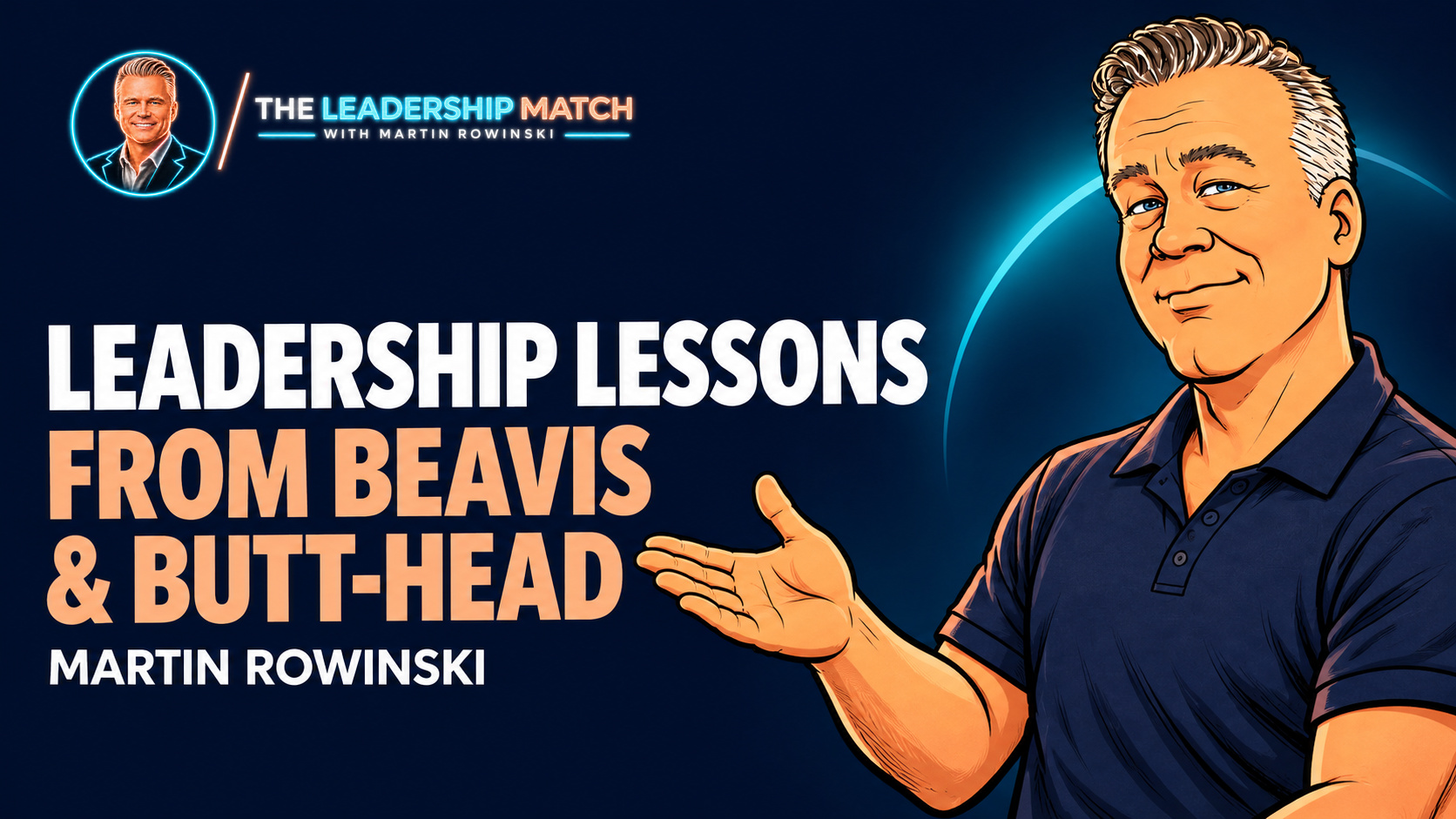
What Beavis and Butt-Head Can Teach Us About Leadership Two cartoon characters who encourage each other's worst ideas, and what that dynamic reveals about confidence, agreement, attention, culture and influence in a leadership team. By Martin Rowinski I never thought I would find a leadership lesson in Beavis and Butt-Head. But there it is. One comes up with a terrible idea, the other encourages it, and neither stops long enough to ask whether it makes sense. Now picture a boardroom. A CEO makes a suggestion. Someone nods. Another person says, love it. Somebody starts putting together a presentation, and within ten minutes a suggestion has become a strategy. Different clothes, same problem. So here is the question I want to explore: are you building a leadership team, or just finding people to laugh at your bad ideas? That sounds harsh, and I'm including myself in it. The problem usually isn't that we deliberately hire people who agree with everything. The problem is that agreement feels good. It feels like support. It feels like momentum. It makes a meeting so much easier. Somebody challenging your idea? That slows things down. Now you have to explain yourself. You may have to admit you haven't thought something through. But that uncomfortable moment might be the most valuable thing that happens in the meeting. A Confident Answer Is Not Always a Good Answer Butt-Head often acts like the person in charge. He has an opinion, and he delivers it with certainty. And Beavis just goes along. There is a familiar trap in that. We mistake being comfortable giving an answer for having a good answer. Picture two people presenting a recommendation. The first says: this is absolutely the right move, we can launch in ninety days, I have no concerns. The second says: I think this could work, but we have two assumptions we haven't tested, and I'd like to validate those before we commit to the timeline. Who sounds more confident? Probably the first person. Who has given you more useful information? Possibly the second. Yet in fast-moving organizations, that second person gets labeled hesitant. Too cautious. Not strategic enough. We say we want thoughtful leaders, then reward the person who removes uncertainty from the conversation, even when the uncertainty still exists in the business. Confidence is useful. People need leaders who can make decisions and take responsibility. But I want to know what the confidence rests on. What have you tested? What experience are you applying? What are you assuming? And what would make you change your mind? That last question matters most. If someone cannot describe anything that would change their recommendation, I want to understand why. Maybe the evidence is exceptionally strong. Or maybe they are defending a position they have become attached to. And I have to ask myself the same thing. When was the last time I said to my team, I was confident about this and I was wrong, and could I say it without immediately explaining why somebody else caused the outcome? Your team learns from that moment. They learn whether confidence in this organization includes the ability to reconsider, or whether everyone is expected to defend yesterday's answer forever. Enthusiasm Moves Faster Than Evaluation Beavis and Butt-Head don't usually improve an idea by talking about it. They make each other more excited about it. That happens in leadership too. Someone proposes an acquisition. Someone else talks about the growth opportunity. Another person mentions the publicity. By the end of the meeting, everybody is discussing how to announce it, and nobody has seriously asked whether the two businesses can operate together. Enthusiasm has moved faster than evaluation. Here is where leaders need to be honest with themselves. Sometimes people agree because they have learned what happens when they don't. Maybe the last person who raised a concern got interrupted. Maybe you asked for feedback, then spent fifteen minutes explaining why every concern was mistaken. Maybe someone challenged you in a meeting and afterward you told them they should have been more supportive. You might have meant, I wish you had handled that differently. They might have heard, don't do that again. That is why saying my door is always open doesn't settle the question. People are paying attention to what happens after they walk through it. Imagine an employee says, I understand why we want to launch next month, but I don't think customer support is ready. You could respond, we need solutions, not problems. It's a familiar phrase, and sometimes it's reasonable to ask someone to help solve an issue. But in that moment you may have just punished the person for bringing you information before they had an answer. Another response: walk me through what you're seeing. What would fail first? Now you have something to work with. You may still launch next month. The concern may be manageable. You may decide the risk is worth taking. Listening doesn't require agreement. It requires taking the information seriously. Activity Is Not Progress Beavis and Butt-Head are very good at reacting. Something happens, they laugh, they get excited, they create a problem. There is activity. But activity doesn't necessarily improve their situation. That is a useful question for a business. We launched a campaign. Did it reach the right customers? We held an event. Did it build relationships that continued afterward? We announced a partnership. What are the two companies now doing together? We introduced a new tool. Is the work easier, faster, or more accurate? Those questions are surprisingly uncomfortable when everyone has already celebrated the announcement. I'm having this conversation on a podcast. Of course I want people to watch, listen, and share it. But if someone watches this episode, enjoys the cartoon reference, and remembers nothing else, I've earned some attention. If that person goes into a meeting tomorrow and makes it easier for a colleague to raise a concern, the episode has accomplished something more. Attention can serve purpose. Visibility can create opportunities, and an audience can become a community or a customer base. We just need to understand the connection. Your Team Notices What You Reward and Excuse In the cartoon, a laugh is often enough to encourage the next bad idea. In a company, the signals are more varied. Who gets promoted? Who gets praised in front of everyone? Who gets another chance? Whose behavior gets explained away? Your team notices all of it. Suppose you tell people respect is a company value, but your highest-performing salesperson humiliates colleagues and the response is always, well, you know how they are. The team learns something specific: that behavior is acceptable if the numbers are good enough. Or you say you want transparency, but every time a manager reports a problem, the meeting turns into an interrogation about why they didn't prevent it. You may start receiving better-looking reports. You may not be getting a healthier business. People are learning how to present information so they can survive the conversation. That is why I think leaders should examine ordinary moments when they want to understand their culture. Watch what happens when somebody admits a mistake. Watch what happens when an employee asks for help. Watch what happens when someone says, I don't understand. Do they get the information they need, or do they leave wishing they had stayed quiet? This doesn't mean removing standards or excusing repeated poor performance. You can say this result is unacceptable and we need to fix it while still making it possible to discuss honestly how it happened. In fact, you need that honesty to choose the right response. Maybe someone ignored a clear process. Maybe the process was confusing. Maybe two departments were given conflicting priorities. Maybe the person responsible never had the resources to deliver what was promised. Those situations require different decisions. You won't understand which one you have if everyone is focused on protecting themselves. Influence Doesn't Follow the Org Chart Beavis and Butt-Head don't need an organizational chart to affect each other's decisions. Neither does your team. In most organizations there are people whose influence goes well beyond their title. The experienced employee everyone asks for advice. The colleague who helps new hires understand how things really work. The person who has watched three of these initiatives come and go. You introduce a new process. You explain it carefully. The presentation is crystal clear. People ask a few questions, the meeting ends, and someone turns to a trusted colleague and asks, what do you think? That answer may shape what happens next as much as your presentation did. If it's, this could solve a problem we've had for years, people may give it a serious try. If it's, just wait a month, they'll forget about it, you have another challenge to address. The response should not be to silence that person or bring them closer so they'll repeat your message. Get curious. Why do people trust them? What are they seeing that you aren't? Have they watched several similar initiatives come and go? Are they raising legitimate concerns badly, or encouraging resistance for another reason? You need to understand the difference. And this applies to anyone listening who doesn't have a leadership title. You influence the people around you through the questions you ask, the standards you keep, and the way you respond when things go wrong. If a colleague admits they're confused, you can make it easier for them to ask for help. If a meeting starts moving too quickly, you can ask, before we commit, what are we assuming about the timeline? You don't have to take over the room to improve the conversation. Five Things to Try After This Episode It would be easy to listen to this and picture somebody else. The overconfident executive, the colleague who agrees with everything, the person who creates noise and calls it progress. The useful question is where I do these things myself. Where have I sounded more certain than the evidence justified? When have I welcomed agreement because I was tired and didn't want another discussion? What behavior have I tolerated because addressing it would be uncomfortable? Good leadership doesn't require never falling into those habits. It requires noticing them and being willing to change what happens next. 1. Separate what you know from what you're assuming. After any recommendation, ask the room: what do we know, and what are we assuming? Give those two categories separate space. You can still move quickly and still decide with incomplete information. At least now you know which part of the decision depends on something unverified. 2. Collect judgment before you share your opinion. For an important decision, ask everyone to write down their recommendation and their biggest concern before discussion. Once you announce, I'm excited about this and I think we should do it, you've made disagreeing harder, even if you didn't intend to. As the leader, your opinion carries weight before you have offered a single reason for it. 3. Finish the sentence before you launch. This will be worth doing if... and describe an outcome beyond the launch itself. Customers can solve this problem without calling us twice. Our managers spend less time correcting the same mistakes. Then return to that sentence afterward. Did it happen? If it didn't, what did we learn? 4. Audit one signal. Think about the last three people you praised publicly and what you praised them for. Then think about a behavior you dislike that keeps happening. Is anything in your own response making it worth repeating? Maybe you say you dislike last-minute heroics, but the person who creates a crisis and stays late to fix it gets more recognition than the person who quietly prevents one. Start with one signal you can make consistent. 5. Invite the concern back into the room. If a colleague raises a concern and the discussion moves on, invite them to finish. That gives the team another opportunity to consider information it may have overlooked. There should also be room for humor at work. People should be able to laugh together, and a team doesn't become effective by making every conversation solemn. The question is whether people can laugh with you and disagree with you. Can they enjoy working with you and still say, I don't think this is a good idea? Can they support your leadership without pretending you're always right? That's a relationship worth building, and it gets built in small moments. At your next meeting, when a concern arrives, ask the person to walk you through what they're seeing and what would fail first. Then make the decision, explain your reasoning, and name what you will watch to see whether it is working. If someone changes your mind, tell them. Let the room see that bringing you a better argument is a useful thing to do. Two cartoon characters encouraging each other's terrible decisions, and somehow a reason to take a closer look at our next executive meeting. So I'll leave you with this. When you bring an idea to your team, do they help you make it better, or have they learned to tell you it's already great? Thanks for joining me. And if you share this episode with your leadership team, maybe explain why before they see the thumbnail. Frequently Asked Questions What does Beavis and Butt-Head have to do with leadership? They model a pattern that shows up in a lot of leadership teams: one person proposes, another encourages, and nobody stops to test whether the idea makes sense. The cartoon is a mirror for boardroom agreement, not a management theory. How do you build a leadership team that challenges you? Invite concerns before a decision is finalized, and respond without penalizing people for raising them. Separate what the team knows from what it's assuming, and let what you reward in small moments teach people what is safe. Why do teams agree with the leader even when they disagree? Often because they have learned what happens when they don't: an interrupted sentence, a fifteen-minute rebuttal, or a conversation afterward about being more supportive. People watch what happens after they walk through an open door. How do you evaluate a confident recommendation? Ask what evidence supports it, which assumptions remain untested, and what would change the recommendation. These questions help you assess the reasoning behind the delivery. What is the difference between activity and progress? Activity is the launch, the campaign, the announcement. Progress is what changed afterward: whether customers solved the problem, whether the work got easier, whether the relationship outlasted the event. Finish the sentence "this will be worth doing if..." before you start. How do you improve culture without lowering standards? Maintain clear performance standards while investigating what happened. An ignored process, unclear instructions, conflicting priorities, and insufficient resources require different responses. Honest discussion helps you identify the right one.
All articles