Team Alignment: Michael King on Restoring Momentum
By The Leadership Match
Michael King shares how clear roles, measurable outcomes, trust, and fewer obstacles help leaders fix team misalignment and restore momentum.
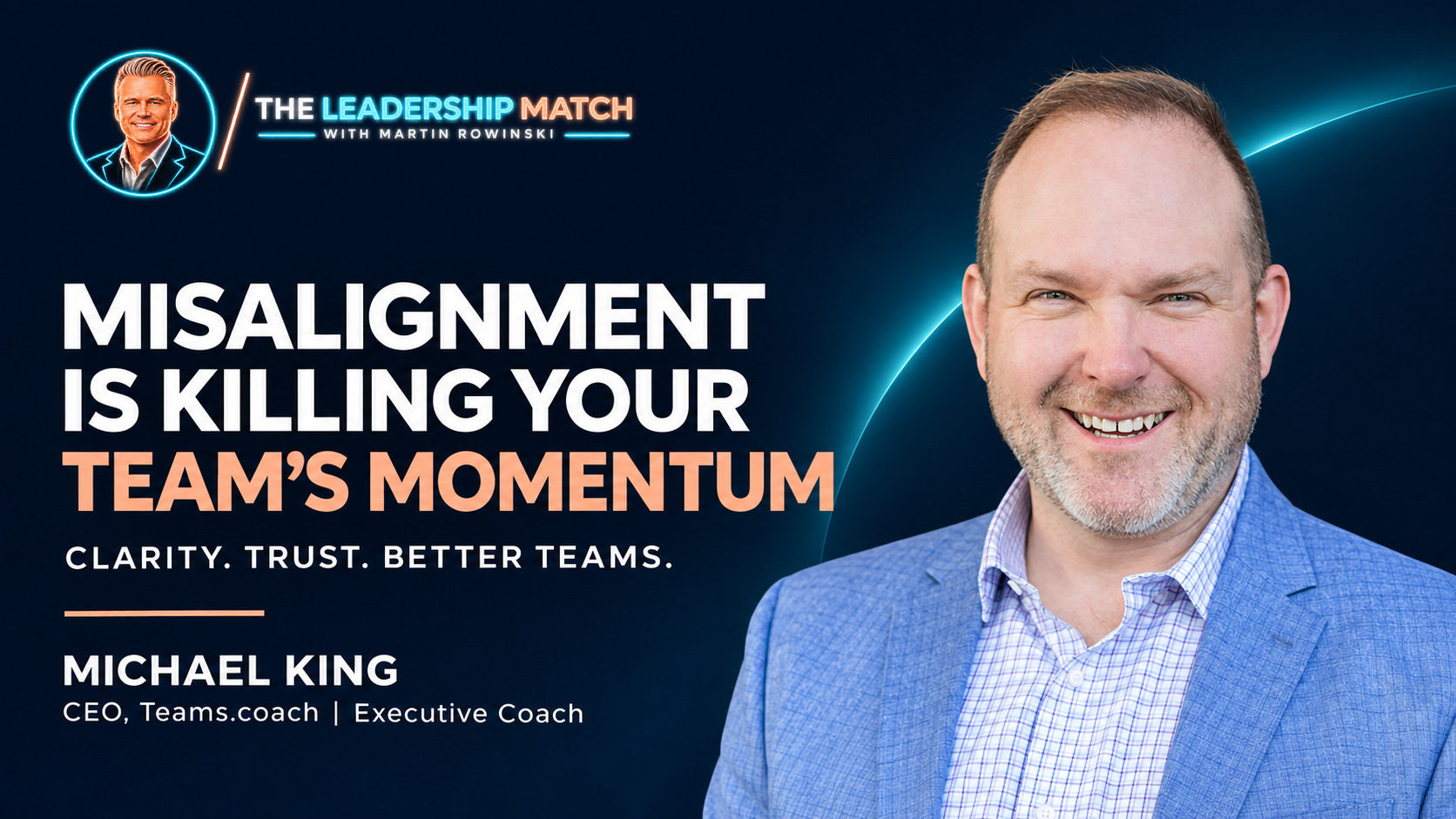
Misalignment Is Killing Your Team’s Momentum Michael King’s path from recording artist to church leader shaped how he coaches executives today. His message: before asking your team to move faster, understand what is slowing it down. By Martin Rowinski Michael King started as a musician. He became a recording artist, then a worship leader and executive pastor at what he described as one of America’s fastest-growing churches. The responsibilities stretched far beyond music. Production leader. Chief of staff. Guest experience coordinator. Systems architect. At one point, he had more than a thousand people in his leadership pipeline. That range gave him a close view of how teams work under pressure. He experienced teams that brought out the best in people and teams that made good work difficult. When executive coaching became his next chapter, he carried a question with him: “What would happen if I could help contribute to the idea that no one ever had to be a part of a horrible team ever again?” Today, as CEO of Teams.coach, Michael helps leaders examine the structure, relationships, and expectations behind their results. I know his work personally. Michael is a longtime friend, and I have worked with him as a coach. During our conversation on The Leadership Match, we explored a problem that can hide inside a busy organization: people are working hard, but their efforts are not moving the business forward together. That is where team alignment becomes a leadership responsibility. Team Misalignment Often Looks Like a Full Calendar Misalignment can be difficult to recognize because it often resembles productivity. Meetings happen. Tasks get assigned. People respond to messages. The calendar fills up. Yet when someone asks what changed because of all that activity, the answer is less clear. Michael described looking at his schedule before getting out of bed and questioning whether the commitments were producing a return on his time. “Strategy without outcomes produces burnout.” That is how he describes the frustration of sustained effort without visible progress. His point gives leaders a useful place to look before adding another initiative. Can your team connect its activity to the results it is responsible for delivering? If the connection is unclear, working harder may simply increase the amount of energy spent on competing priorities. Team misalignment can show up as repeated discussions about ownership, decisions that keep returning to the founder, or projects that remain active without a shared definition of completion. The work is happening. The direction needs attention. The Two-Question Team Alignment Test Michael’s most practical challenge starts with your organizational chart. For every person on it, can you answer these two questions? “What's their one singular outcome that they should be delivering?” “How do you measure success?” The distinction matters. The first question establishes the contribution the role exists to make. The second establishes how you know that contribution is happening. A job title cannot answer either question on its own. Consider a marketing leader. Publishing content, managing campaigns, coordinating events, and reporting results may all belong to the job. But which outcome should guide the choices between those activities? And what evidence will show that the work is effective? Without agreement, the leader may believe success means increasing visibility while the CEO expects more qualified sales conversations. Both people can be working in good faith. They are still working from different expectations. Michael’s advice is to identify that gap explicitly: “If you can't answer those two things, you're already out of alignment.” Ask the person in the role to answer the same questions independently. Compare the responses. The differences will tell you where a conversation is needed. Structure Makes Strategy Possible Michael returned to one idea throughout our discussion: “Structure is always your gateway to effective strategy.” He illustrated it through his own creative work. Michael combines music, film, and leadership ideas in ways that do not resemble a conventional executive keynote. Someone once told him the concept would never work. His explanation for why it does work was practical: “I have great people that help execute it.” An idea needs people who can deliver it. Those people need clear responsibilities, useful information, and the authority to make the decisions their work requires. A company can announce a strategy to improve customer experience. But if sales, operations, and support each define that experience differently, the announcement leaves important work unresolved. Who owns the outcome? Where do handoffs occur? Who addresses a problem that crosses departments? How does the team know whether the experience is improving? Those details determine whether people can execute the strategy together. Before concluding that your team lacks commitment, examine whether you have given it a workable structure. To Build Momentum, Identify What Slows the Team Down Michael’s approach to momentum was one of my favorite parts of the conversation. He does not begin by asking how much more the team can do. “I look at momentum as, are you able to clearly identify the things that are slowing you down?” That shifts the leadership conversation. A team might need fewer approval steps. It might need a decision that has been postponed for weeks. It might need two leaders to resolve conflicting priorities. Adding urgency does little to remove those obstacles. Imagine a capable manager who must seek permission for every routine customer exception. The founder becomes frustrated by constant interruptions. The manager becomes frustrated by waiting. Customers experience delays. Everyone is busy responding to a problem the decision structure keeps producing. Clarifying the manager’s authority could improve the situation more than another meeting about responsiveness. Momentum can begin with subtraction. Remove an unnecessary step, resolve a recurring ambiguity, or stop a commitment that no longer serves the goal. Ask your team where work consistently stalls. Then choose an obstacle you can actually change. Why Fun and Trust Matter to High-Performing Teams Michael’s experience as a musician and creative leader also shapes how he thinks about culture. When I asked why fun matters, he connected it to the conditions that allow people to contribute openly. “I've never once ever been a part of a team where creativity flourished without fun, ever.” That is a statement about his experience, and it invites a useful question about ours: do people enjoy working together enough to offer ideas before they are fully polished? A team may have talented people who hesitate to contribute because they expect embarrassment, dismissal, or unnecessary conflict. Michael described the importance of emotional and psychological safety, healthy relationships, and room for collaboration. Leaders influence those conditions through ordinary interactions. How do you respond when someone asks a basic question? What happens when a team member disagrees with your idea? Can someone acknowledge a mistake while still expecting a constructive conversation? Fun does not have to mean organized entertainment. It can mean the ease people feel when they trust one another, enjoy a shared challenge, and know their contribution will receive a fair hearing. That kind of environment deserves deliberate attention. Give Each Week a Clear Target Michael’s team methodology includes targets, engagement, action, momentum, and synergy. He described a weekly prompt on his platform that asks people to declare where they will focus their energy. “What's your promise for you to be able to deliver for this week?” The question makes priorities concrete. A task list can grow indefinitely. A clear weekly target requires someone to decide what matters most. It also gives the leader an opportunity to identify conflicts early. Does one person’s target depend on work another person has not prioritized? Does the team have the capacity to deliver what it has promised? Are the individual targets connected to the broader objective? A useful target is specific enough to review afterward. The team should be able to discuss what happened without debating what the commitment meant. That review can include progress, obstacles, and adjustments. The purpose is to keep effort connected to an outcome. Keep Vision, Communication, and Systems Connected I asked Michael what a rapidly growing company should address first: vision, communication, or systems. His answer was to treat them together. “Vision should be an active living part of your organization.” A vision becomes useful when people can apply it to a decision. It helps explain why a project matters, why one opportunity takes priority, or why the company chooses not to pursue something. Michael wants that direction to be unmistakable: “I don't want anybody on my team to ever have to guess what our vision is.” But a clearly communicated vision still needs systems that support the work. As responsibilities expand, a process that once worked through informal conversations may need documented handoffs. A founder’s personal oversight may need to become a manager’s responsibility. Information that once lived in someone’s memory may need a dependable home. Michael put the connection simply: “Your systems are your gateway to effective scale.” Growth creates a reason to examine how work gets done. Keep what remains useful. Adjust what causes repeated friction. Make sure people understand both the direction and the process supporting it. The Practice of Proximity Builds Leadership Capacity When I asked Michael for one habit he would give every leader, he chose “the practice of proximity.” His point was about spending intentional time with the people who can carry more responsibility. “Build your team by design and know who you're inviting in.” Delegating an assignment tells someone what needs to happen. Discussing a decision helps them understand the judgment behind it. Why did you choose that approach? What tradeoffs did you consider? What would change your mind? When should someone act independently, and when should they bring others into the conversation? Those discussions help people develop the ability to contribute beyond a task list. Michael connects that development to the leader’s capacity. If more people can handle meaningful decisions, fewer responsibilities must return to one person. Proximity can be a regular working session, a thoughtful debrief, or time spent reviewing a difficult choice together. What matters is that the interaction helps another person grow. Five Ways to Improve Team Alignment This Week You do not need to redesign the entire organization to apply these ideas. 1. Run the two-question test. For each role, identify its primary outcome and how success is measured. Compare your understanding with the person doing the work. 2. Declare a weekly target. Ask each team member what they intend to deliver. Check that the commitments support one another and the organization’s priorities. 3. Remove one obstacle. Find a recurring delay, unclear handoff, or unnecessary approval. Address it before adding more work. 4. Connect a decision to the vision. In a meeting or written update, explain why the current priority matters and what it helps the organization accomplish. 5. Spend time developing someone’s judgment. Review a real decision with a team member. Invite their reasoning before sharing yours. These actions give alignment a practical form. People can see what they own, understand why it matters, and identify what is preventing progress. Give People the Clarity to Move Together Michael’s closing challenge was to keep vision present in the daily work. “Make sure that vision is alive.” For me, that connects the entire conversation. A leader’s responsibility is to create the conditions for people to do their best work together. That means clear outcomes, shared expectations, honest communication, and time spent developing the people who will carry the business forward. If your team’s momentum has slowed, start with Michael’s two questions: What outcome does each person own, and how do you measure success? Then ask what is getting in their way. Those conversations can reveal more than another strategy meeting. They can show you where responsibilities are unclear, where decisions are stalled, and where your team needs support. You do not have to solve every alignment problem this week. Clarify one role. Remove one obstacle. Spend meaningful time with someone you are developing. Give your team a clearer path to move forward together. Watch “Misalignment Is Killing Your Team’s Momentum” with Michael King on The Leadership Match with Martin Rowinski. Learn more about Michael at michaelkingjr.com and Teams.coach. Frequently Asked Questions What is team alignment? Team alignment is a shared understanding of priorities, responsibilities, and desired outcomes. It helps people see how their work contributes to the organization’s direction. What are signs of team misalignment? Signs can include conflicting priorities, unclear ownership, repeated approval delays, and different interpretations of success. A busy team that struggles to explain its progress may need clearer alignment. How can leaders improve team alignment? Clarify the primary outcome of each role, agree on how success will be assessed, and connect individual priorities to the team’s goals. Review obstacles and expectations regularly. How can a team build momentum? Identify what repeatedly slows work down. Clearer decisions, simpler handoffs, and fewer competing priorities may help the team make progress before additional work is introduced. Why does spending time with emerging leaders matter? It gives leaders an opportunity to explain their judgment, discuss tradeoffs, and provide feedback. Those conversations can prepare others to take greater responsibility with confidence.
All articles