Leading Through Uncertainty: Courage, Crisis & Finding Hope with Melanie Marshall
Melanie Marshall
Keynote Speaker on Leadership Under Uncertainty
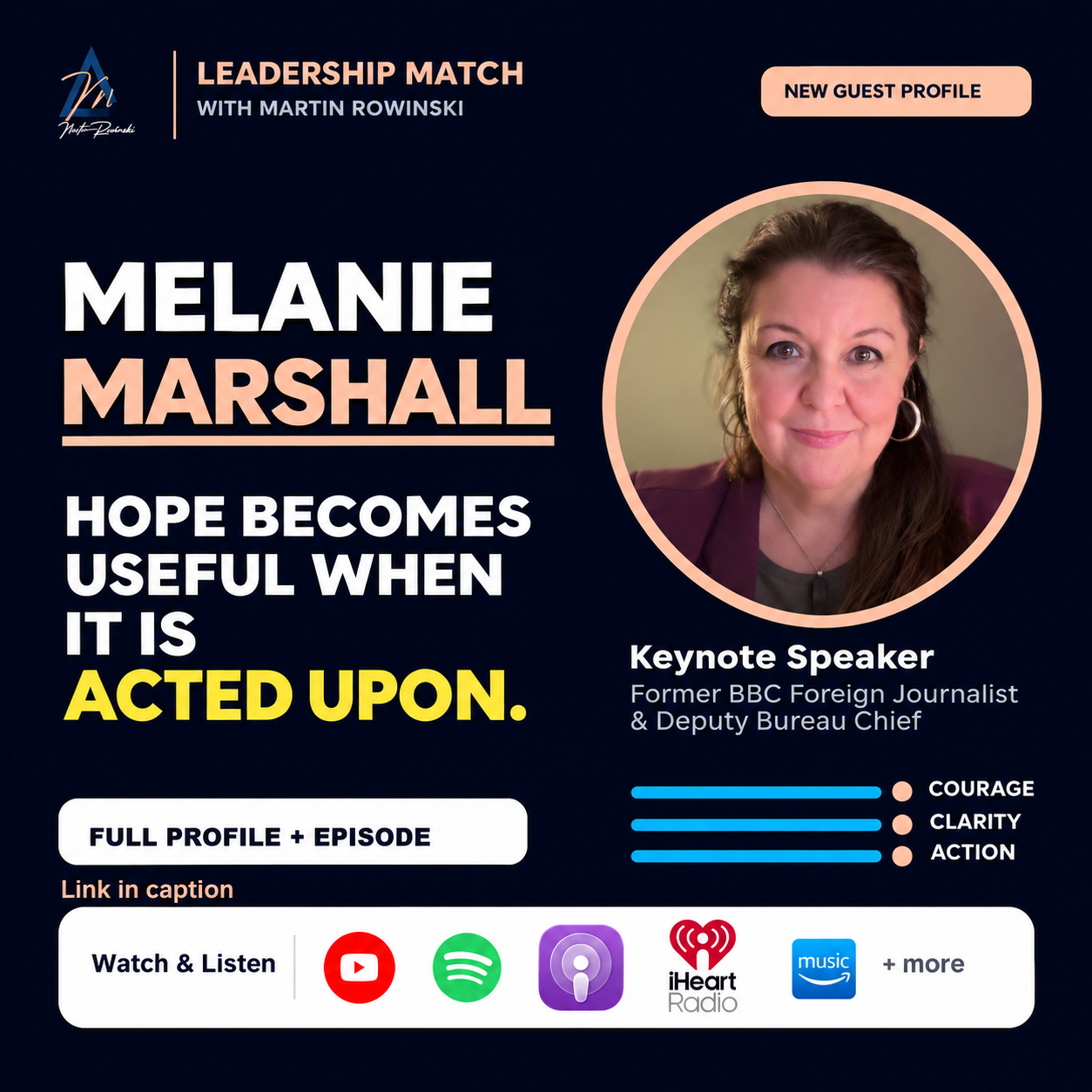
Melanie Marshall is a keynote speaker, former BBC foreign journalist, and former Deputy Bureau Chief in Jerusalem whose career spans more than two decades of reporting from conflict zones, natural disasters, and rapidly changing environments. Her work has earned a Peabody Award, a Royal Television Society Award, and an Emmy nomination. Today, Melanie helps leaders and organizations navigate uncertainty through her See in the Dark™ framework, drawing on firsthand experience making consequential decisions, adapting under pressure, and keeping teams moving when the plan no longer fits reality. Her work focuses on adaptive leadership, high-stakes decision-making, accidental bravery, and deliberate optimism. She also leads Imrama Media & Content Studio, creating short films, narrative strategies, and consulting for organizations operating in complex environments. Show Description What does leadership look like when the windows are shattering, your team is looking to you, and there is no clearly safe next move? In this episode of Leadership Match, Martin Rowinski sits down with Melanie Marshall to explore what twenty years of BBC field experience taught her about courage, judgment, and leading through uncertainty. From moving a news team between hotels during a hurricane to reading subtle warning signs in Zimbabwe, Melanie shares how leaders can find their next responsible step without waiting for the full picture. The conversation also explores the personal side of resilience: the failure of her first business, the kindness she witnessed in Ukraine, and a friendship near Mosul that changed how she understands courage and legacy. With humor and candor, Melanie explains why effective leadership requires listening to uncomfortable information, meeting people’s immediate needs, and turning hope into action.
Key takeaways
- Act without waiting for certainty. When the current situation is no longer sustainable, identify the next responsible move and reassess as new information emerges.
- Read the signals around you. People’s behavior, local knowledge, and trusted relationships can reveal what formal plans and incomplete data miss.
- Take care of people’s immediate needs. Clear direction matters, but so do food, safety, and the practical support that allows a team to function under pressure.
- Build trust before a crisis. Strong relationships give leaders access to honest feedback, sound judgment, and help when conditions change.
- Let go of what you wish were true. Listen to information that challenges your assumptions and consider what action becomes possible when you accept it.
- Separate failure from personal worth. Melanie’s first business taught her how easily a failed venture can become a source of shame—and why trying still matters.
- Make hope actionable. Optimism becomes useful when it fuels purposeful decisions, supports others, and creates forward movement.